Limits of Generative Design
On August 20, 2019, I presented at Recurse Center's Localhost Lightning Talks IX, an evening gathering of programming enthusiasts at Managed by Q in New York City. My talk explored the inherent limitations and constraints of generative art through the lens of GLSL shaders and Three.js, questioning the boundaries of algorithmic creativity and what happens when we push computational systems to their limits.
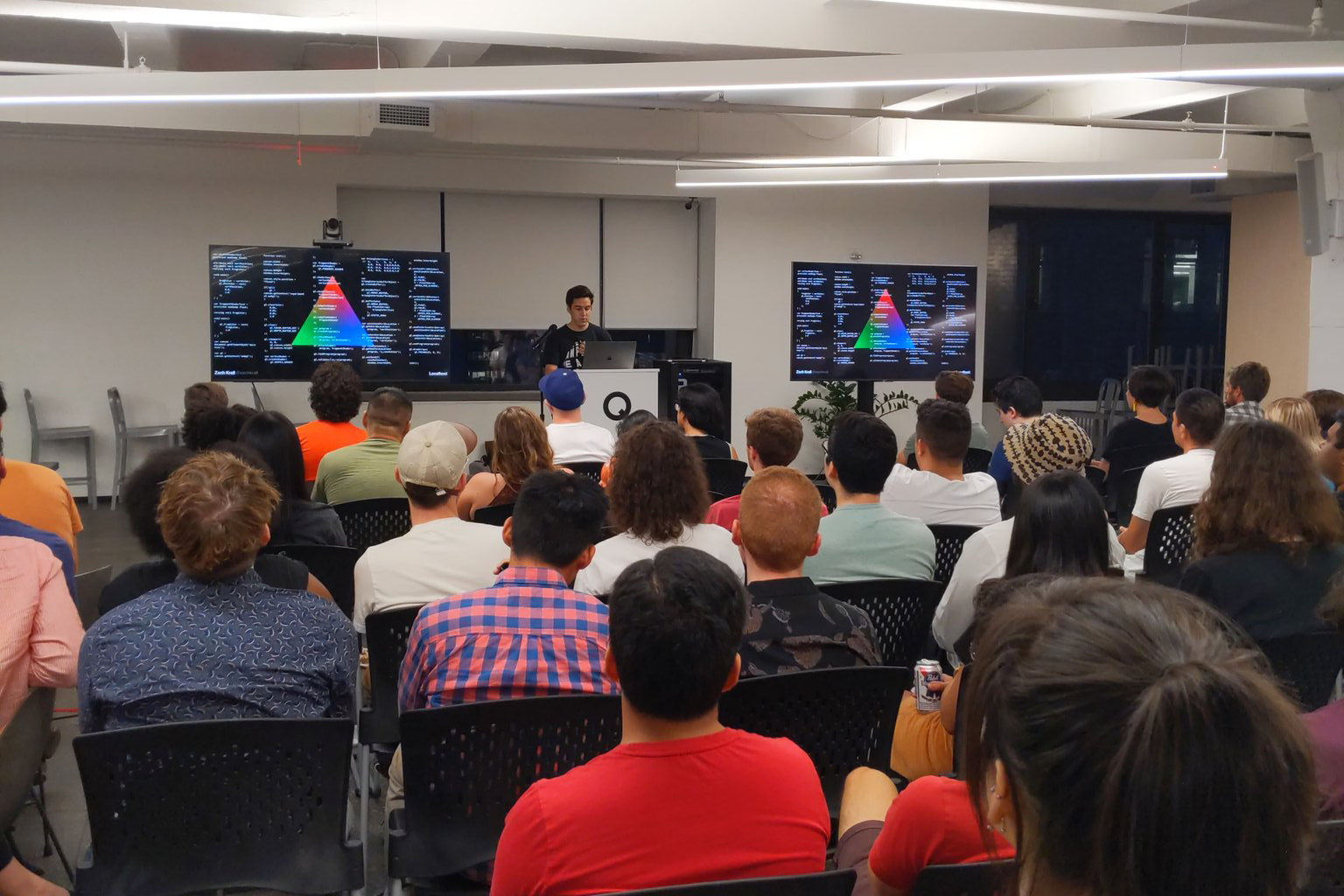
Localhost events at Recurse Center provide a unique forum for sharing programming experiments and insights in an intimate, supportive environment. The lightning talk format—short, focused presentations followed by informal conversation—encourages speakers to distill complex technical concepts into accessible narratives. This particular evening featured three diverse presentations, from text-adventure game engines to crossword puzzle generation, creating a rich tapestry of creative coding approaches.
In my presentation, I examined how the technical constraints of GPU programming and real-time rendering actually become creative catalysts rather than mere obstacles. Using GLSL and Three.js, I demonstrated how limitations in computational power, mathematical precision, and rendering capabilities force us to think more critically about what we're trying to create and why. These constraints often reveal unexpected aesthetic possibilities that wouldn't emerge from unlimited computational resources.
The exploration of generative design's limits also opened up philosophical questions about authorship and creativity in algorithmic art. When we create systems that generate visual outcomes, we are designing constraints and rules rather than final artifacts. Understanding where these systems break down—where they produce errors, artifacts, or unexpected behaviors—often leads to the most interesting creative territories. The glitches and limitations become part of the artistic vocabulary.
The response from the Recurse community was energizing, with attendees engaging in thoughtful discussions about the balance between control and chance in generative systems. The evening reinforced my belief that some of the most compelling work in computational creativity comes not from attempting to simulate unlimited creative freedom, but from thoughtfully engaging with the very real limitations of our tools, materials, and mathematical frameworks.