The Algorave at New York Live Arts Studios represented a cutting-edge intersection of computer programming and live performance, where code itself becomes the instrument for creating music and visuals in real-time. Presented by LiveCode.NYC, an artist collective at the forefront of the global Algorave movement, this event showcased how programming languages can serve as expressive tools for artistic creation. Unlike traditional electronic music performances that rely on pre-programmed sequences or conventional instruments, algoraves make the creative process visible by projecting live code for the audience to witness as it transforms into sound and imagery.
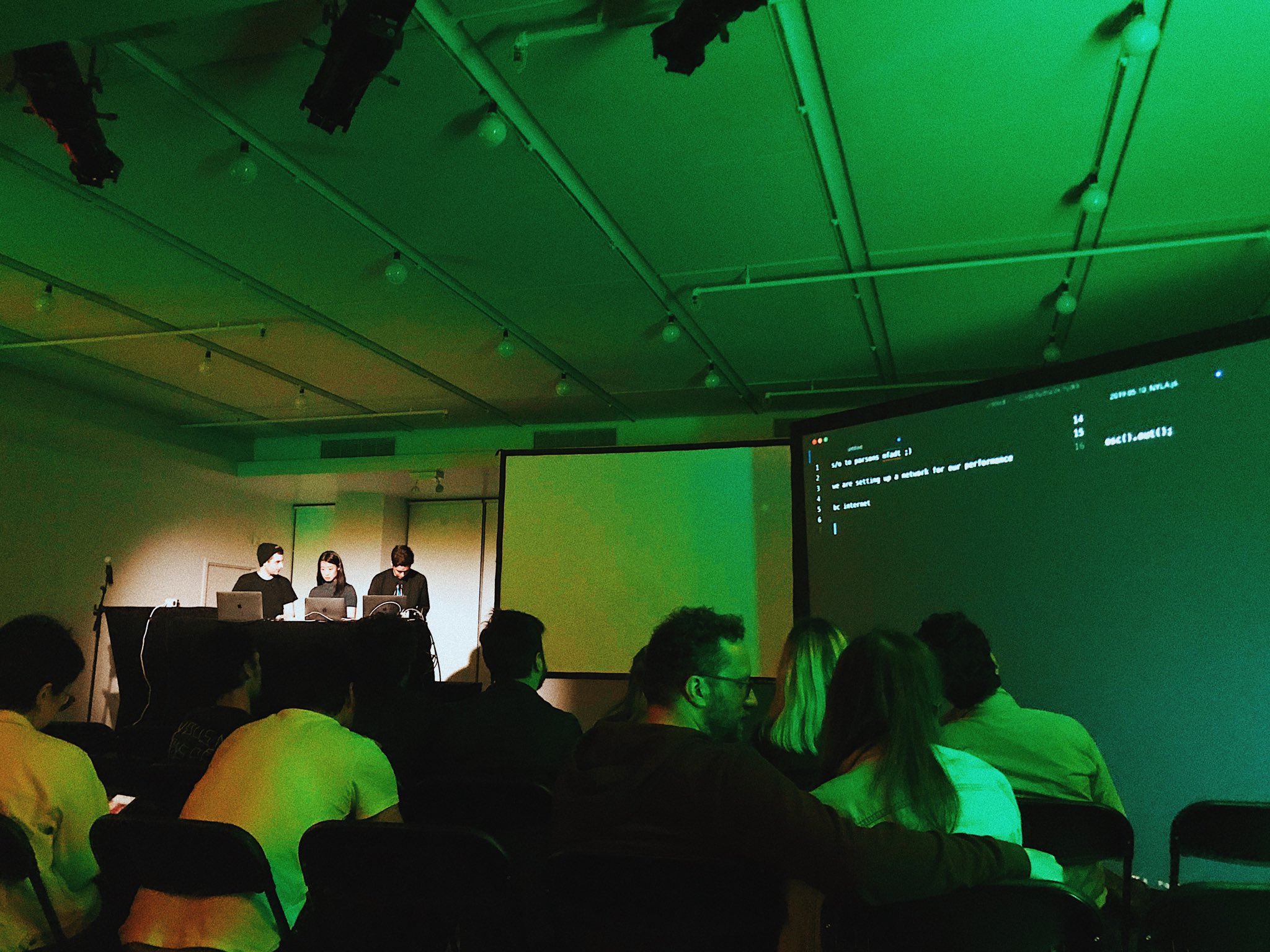
Performing alongside fellow artists including Scorpion Mouse, CIBO + Ulysses Popple, Colonel Panix + Doc Mofo, and Codie, I provided live coded visuals for the musical duo Koala Tokki. Each act at the event brought distinct approaches to live coding—some performers created both sound and visuals, while others worked in collaborative pairs where one artist focused on music and another on visual elements. This diversity demonstrated how live coding could express radically different artistic visions through the same fundamental practice of real-time programming, with performances ranging from ambient compositions to rhythmic dance pieces to experimental polyrhythmic structures.
My participation involved live coding generative visuals that responded to and complemented Koala Tokki's musical performance, exploring algorithmic techniques to create dynamic imagery that evolved throughout their set. The challenge was to create a visual language that enhanced the music without overwhelming it, finding moments to mirror sonic patterns while also introducing visual counterpoints. This real-time collaboration required deep listening and spontaneous decision-making, where my code had to react to the unexpected turns in their musical improvisation while maintaining its own coherent visual narrative.
The algorave format is particularly interesting because it demystifies the relationship between technology and art by making the creative process transparent. When audiences see code being written, debugged, and modified live, they witness the artistic decisions, happy accidents, and problem-solving that typically remain hidden in electronic music and visual performance. This transparency transforms what could be an alienating wall of text into a window into artistic thinking, revealing how computational logic and creative intuition interweave in digital art-making. For visual live coding specifically, the audience can observe how abstract code translates into concrete imagery in real-time.
Performing at New York Live Arts—a venue traditionally associated with dance and movement-based work—highlighted how live coding extends beyond purely sonic or visual domains into embodied performance. The physical act of typing, the gestures of debugging, and the tension between plan and improvisation all contribute to a performance aesthetic that bridges computational and corporeal practice. This event reinforced LiveCode.NYC's mission to remain open and accessible to anyone interested in learning this practice, positioning algorithmic performance not as an exclusive technical domain but as an evolving creative community.