Introduction to Hydra Workshop
On February 2, 2019, I led a workshop on visual synthesis with Hydra at NYU Tandon as part of Live Code Lab, a day-long gathering that brought together over 180 participants interested in exploring the intersection of code, music, and visual performance. The event was organized by the Music Community Lab, a vibrant community dedicated to experimental music creation and live coding practices.
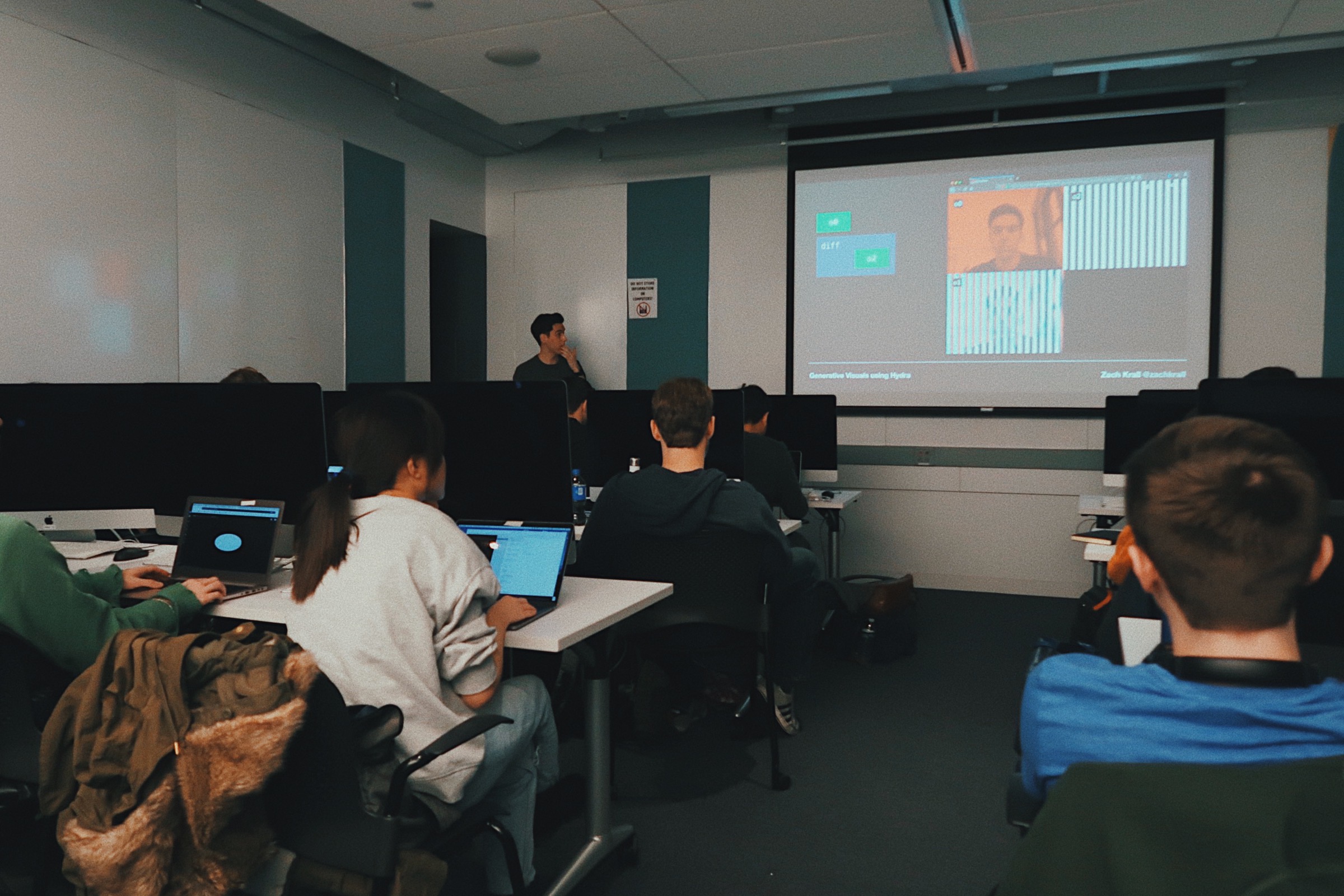
Hydra, created by Olivia Jack, is a remarkably accessible tool for creating live-coded visuals using JavaScript. The workshop introduced participants to Hydra's elegant workflow: taking an input, modifying it through various transformations, and returning an output to the screen. What makes Hydra particularly compelling for beginners is that it requires minimal programming knowledge—participants can start creating compelling visuals almost immediately, even if they've never written a line of code before.
The session covered essential concepts including installation methods, from the browser-based editor to local Node.js setups, providing multiple entry points for different technical comfort levels. We explored Hydra's core variables and functions, including BPM control for synchronizing visuals with music, mouse interaction for performative control, and time-based animation for creating evolving compositions. Through hands-on coding exercises, participants experienced the immediate feedback loop that makes live coding such an engaging creative practice.
To support ongoing learning, I shared a GitHub repository containing all the workshop materials, code examples, and links to Hydra's documentation and community resources. This repository served as both a reference for concepts covered during the session and a launching point for participants to continue experimenting on their own. The hands-on nature of the workshop meant that by the end of the session, everyone had created their own visual compositions and gained familiarity with the syntax and possibilities of the tool.
Live Code Lab was more than just a series of workshops—it was a convergence of artists, musicians, and creative technologists exploring the potential of algorithmic and improvised performance. Being part of this broader gathering reinforced the collaborative spirit of the live coding community, where sharing knowledge and building on each other's ideas is central to the practice. The energy in the room was electric, with participants moving between sessions and sharing discoveries about different tools and approaches to live coding.